
What to Expect When Your Child’s Cast Comes Off
A complete parent’s guide to cast removal, skin care, stiffness, activity restrictions, and helping your child return to normal life after a broken bone. The Medical City Children’s Orthopedics and Spin Specialists provide Pediatric Fracture Care in the following cities.
- Arlington
- Dallas
- Flower Mound
- Frisco
- McKinney
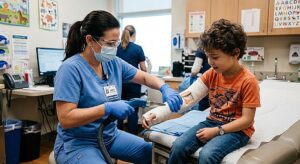 Removing a cast marks an exciting milestone for children and parents alike. When healing progressing to the point that the bone no longer requires rigid protection, and your child can begin moving more freely, the cast is removed. It is also normal for the arm or leg to look and feel different immediately after cast removal.
Knowing what to expect can ease concerns and help support a smooth recovery. This guide from Medical City Children’s Orthopedics and Spine Specialists walks families through each step of the process. It covers cast removal, common changes in the appearance and sensation of the limb, proper skin care, stiffness and weakness, guidelines for returning to sports and play, and situations that warrant a call to our team.
When Will the Cast Come Off?
Children’s bones heal faster than adult bones. Most casts stay on for 4 to 8 weeks, though the exact time depends on:
- The specific bone that was broken (wrist, forearm, ankle, tibia, femur, etc.)
- The type and severity of the fracture
- Your child’s age and overall health
- Whether growth plates were involved
Before removing the cast, your pediatric orthopedic specialist will examine the area and may order an X-ray to confirm that the bone has healed sufficiently. Never attempt to remove a cast at home unless your doctor specifically instructs you to do so with a soft cast.
How to Remove Casts – It’s Safer Than It Looks
Casts are removed with a special electric cast saw. Many children (and parents) feel nervous when they first see or hear the saw. Here is what actually happens:
- The blade vibrates back and forth very rapidly; it does not spin like a regular circular saw.
- The vibration and friction cut through the hard cast material (fiberglass or plaster) but stop before reaching the soft padding and skin underneath.
- Your child will feel vibration and may sense mild warmth or a tickling sensation. The process is not painful.
- The saw is noisy—similar to a vacuum cleaner—so many clinics offer headphones or distraction (toys, videos, or a favorite stuffed animal).
- After the hard shell is cut, a cast spreader gently opens the cast, and the soft padding and stockinette are cut or torn away with safety scissors.
Reassurance tip: Our orthopedic technicians have experience with children. They often demonstrate the saw on their own hand or a parent’s hand first so your child can see that it does not cut skin.
What the Limb Looks and Feels Like Right After Cast Removal
It is completely normal for the previously casted arm or leg to look and feel different. These changes resolve over days to weeks with normal use and gentle care.
Appearance Changes
- Skin is pale, dry, flaky, or scaly
- Possible yellow or grayish patches of dead skin
- Hair may appear darker, thicker, or longer
- The limb looks thinner (muscle atrophy from disuse)
- A mild odor is common from trapped sweat and skin cells
Sensation & Function
- Stiffness in the joints that were immobilized
- Temporary weakness
- Mild soreness or aching
- Possible swelling
- Itchiness of the newly exposed skin
- The limb may feel “light” or strange at first
All of these findings are normal. The skin returns to normal within a few days to a week with gentle washing. Muscle size and strength gradually return with everyday activity and play. Hair color and texture normalize over several weeks to a few months.
Skin Care After the Cast Comes Off
The skin under a cast has been protected from air, light, and normal washing for weeks. It needs gentle care:
- Wash gently with mild soap and lukewarm water. Use your hand or a soft cloth—do not scrub.
- Do not pick, peel, or scratch flaky skin. This can cause irritation, redness, or open areas that may become infected.
- Pat the skin dry. Leave it open to the air when possible.
- Apply a fragrance-free, unscented moisturizer after washing to help soften dry skin. Avoid heavily perfumed lotions that can sting sensitive skin.
- Several warm baths or showers over the next few days will gradually loosen and remove the dead skin.
- Wait a few days before shaving the area if needed, to give the skin time to recover.
Important: Itching is very common. Gently rubbing with the flat of the hand or knuckles is safer than scratching with fingernails.
Stiffness, Weakness, Swelling & Walking
Joints that have been held still become stiff. Muscles that have not been used become smaller and weaker. These changes are temporary.
Range of Motion
Gentle movement is the best therapy for most children. Your doctor may show you simple range-of-motion exercises. Move the joint slowly through its available motion several times a day. Do not force it. Improvement occurs gradually over days to weeks.
Swelling
Mild swelling is common once the cast no long on the body. Elevate the limb when resting and encourage gentle movement of the fingers or toes. Parents should report significant or worsening swelling to the doctor’s office.
Walking After a Leg Cast
It is common for children to limp or turn their foot outward for several weeks after cast removal from the leg or foot. Some younger children may choose to crawl for a short time before they feel comfortable walking again. In most cases, regular walking, play, and daily activities lead to steady improvement. Parents should contact their doctor if the limp gets worse instead of better or if pain continues rather than gradually decreases.
Physical therapy: Most children regain strength and mobility without formal physical therapy. Active play and normal daily activities usually provide enough movement and exercise to support recovery. In some cases, doctors recommend physical therapy for older children, athletes, or children recovering from more complex fractures.
Returning to Activities & Sports
The bone is healed enough for the cast to come off, but it is not yet as strong as it will eventually become. Full remodeling continues for months.
- Your doctor will give specific guidance based on the fracture type and location.
- In general, high-impact activities (running, jumping, climbing, contact sports, skateboarding, trampolines) are restricted for a period similar to the time spent in the cast—often an additional 4–6 weeks or longer.
- Gym class and recess activities may need temporary modification.
- Return to full sports is gradual and depends on restored strength, motion, and confidence.
Pushing too hard too soon increases the risk of re-injury. Follow the personalized instructions given at the cast-removal visit.
Timeline of Typical Recovery
Day of removal
Cast removal, skin inspection, gentle washing, discussion of activity restrictions and home exercises.
First 3–7 days
Skin improves with gentle washing and moisturizer. Mild stiffness and soreness are common. Parents may observe some swelling.
1–4 weeks
Range of motion and strength steadily improve with daily use. Limp (if present) begins to lessen. Most everyday activities feel more natural.
4–12 weeks (and beyond)
Continued strengthening and return to sports as cleared by the physician. Muscle size and hair appearance normalize. Full confidence in the limb returns.
When to Call Our Office
Contact Medical City Children’s Orthopedics and Spine Specialists if your child experiences any of the following after cast removal:
- Increasing pain that does not go away with rest, elevation, or over-the-counter pain medicine (that your doctor recommends)
- Significant or worsening swelling
- Redness, warmth, drainage, or open sores on the skin
- Fever
- Numbness, tingling, or color changes in the fingers or toes
- A limp that is getting worse instead of better after the first 1–2 weeks
- Inability to move the joints after several weeks of gentle activity
- Any concern that something does not seem right
We are here to answer questions and recheck your child if needed.
Helpful Tips for Parents
- Prepare your child ahead of time by explaining that the saw vibrates and tickles but does not hurt.
- Bring a favorite toy, headphones, or a tablet for distraction during cast removal.
- Celebrate the milestone—many children enjoy keeping a piece of the cast as a souvenir (ask the technician).
- Parents should observed stiffness and limping; children recover remarkably well with time and play.
- Follow activity restrictions carefully to protect the healing bone.
- Encourage gentle movement but never force a stiff joint.
- Keep follow-up appointments so we can monitor healing and clear your child for sports when ready.
Questions About Your Child’s Recovery?
Our board-certified, fellowship-trained pediatric orthopedic specialists have experience in caring for children with broken bones throughout the healing process—from the first visit through cast removal and return to full activity.
Our Locations
Medical City Children’s Orthopedics and Spine Specialists provides fracture care and cast services at multiple convenient locations across the Dallas–Fort Worth area:
- Dallas – 7777 Forest Lane, Building C, Suite 135, Dallas, TX 75230
- Frisco – 5575 Frisco Square Blvd., Suite 240, Frisco, TX 75034
- McKinney – 4510 Medical Center Drive, Suite 301, McKinney, TX 75069
- Arlington – 515 W. Mayfield Road, Pavilion 1, Suite 301, Arlington, TX 76014
- Flower Mound – 4300 Windsor Centre Trail, Suite 400, Flower Mound, TX 75028
Fracture Care Clinics are available; no appointment is needed for many acute injuries. Call (214) 556-0590 for appointments or questions about cast removal and after-care.
Medical City Children’s Orthopedics & Spine Specialists provide special care for children’s bones, joints, muscles, and spine—from infants through adolescents.
Please also refer to:
Contact
- Phone: (214) 556-0590
- Fax: 972-347-4916
- medicalcitykidsortho.com
____________________
Citation: Fracture Care – After Cast Removal
The medical content on this page has been carefully reviewed and approved for accuracy by the Southwest Scoliosis and Spine Institute’s qualified healthcare professionals, including our board-certified physicians and Physician Assistants. Our team ensures that all information reflects the latest evidence-based practices and meets rigorous standards of medical accuracy, with oversight from our expert spine doctors to guarantee reliability for our patients.

Recent Comments